Wide Vs Narrow Vs Very Narrow Aisle Racking: Key Differences
Aisle width plays a major role in how efficiently a warehouse operates. From how many pallets you can store to the type of forklift you need and how quickly orders can be picked, the choice between wide aisle, narrow aisle, and very narrow aisle (VNA) racking has long-term implications for cost, productivity, and scalability.
Warehouses with wider aisles typically prioritise speed, flexibility, and ease of use. Narrower aisle layouts, on the other hand, focus on maximising available floor space and increasing storage density. The right solution depends on your inventory profile, throughput requirements, available space, and future growth plans.
Below, we’ll compare wide aisle, narrow aisle, and very narrow aisle warehouse racking to help you decide which layout best suits your warehouse.
Key warehouse racking size differences
| Feature | Wide Aisle | Narrow Aisle | Very Narrow Aisle (VNA) |
|---|---|---|---|
| Typical Aisle Width | 3.0 to 4m | 1.8 to 2.4m | 1.2 to 1.8m |
| Storage Capacity | Lowest | Medium | Highest |
| Forklifts Needed | Standard counterbalance | Reach trucks | Turret or articulated trucks |
| Speed & Manoeuvrability | Fast and simple | Good, slightly slower | Slower but controlled |
| Cost to Set Up | Lowest | Medium | Highest |
| Best For | Easy access and fast movement | Growing warehouses needing more pallet locations | Maximising available floor space |
| Limitations | Uses the most floor area | May need specialist kit | Specialist trucks and more planning |
Wide Aisle Racking
Typical aisle width: approximately 3-4 metresBest for: standard forklifts, fast movement, mixed inventory
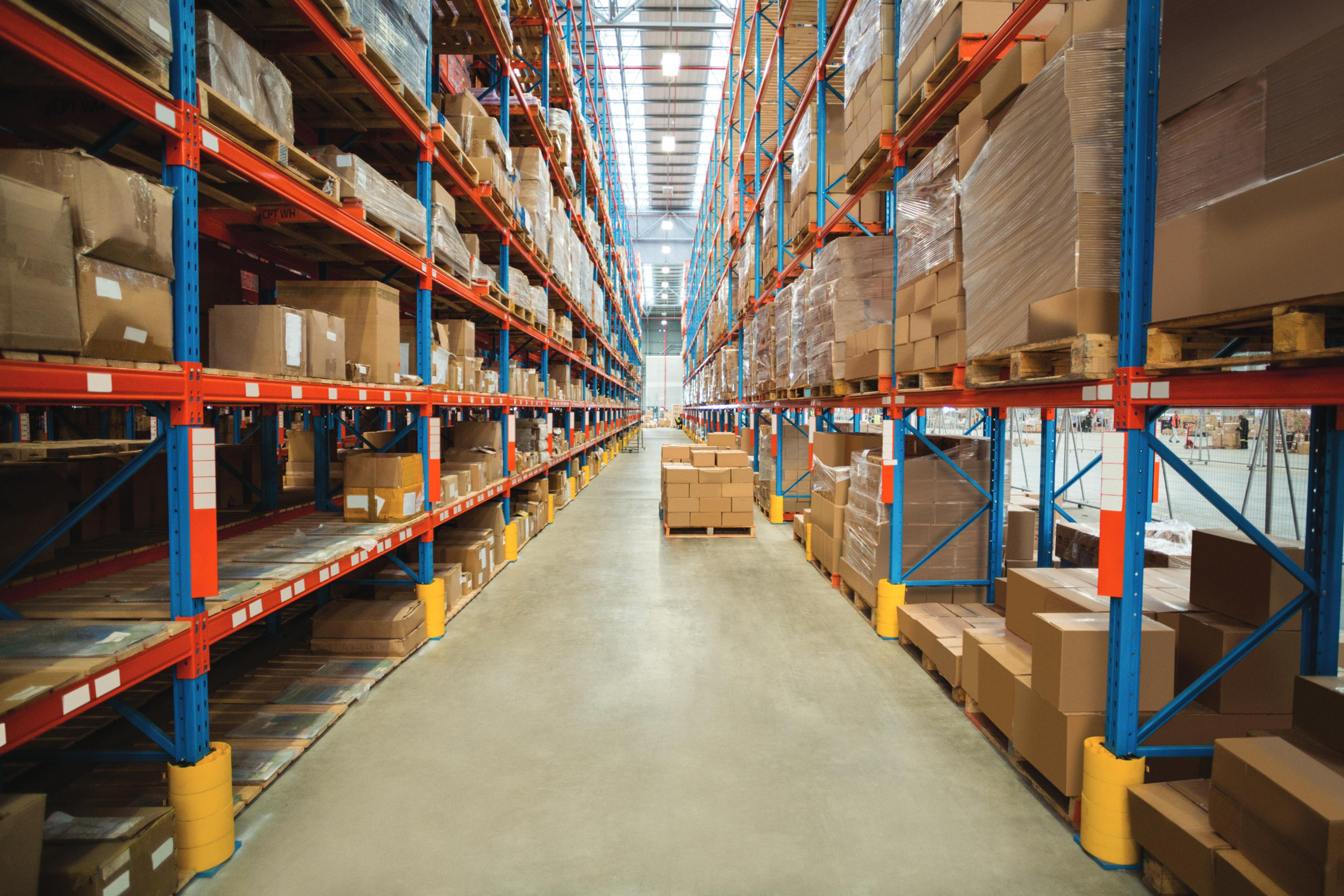
Wide aisle racking is the most common warehouse layout and is often chosen for its simplicity and flexibility. The wider aisles allow standard counterbalance forklifts to manoeuvre easily, making this setup ideal for operations with high throughput, frequent picking, or multiple vehicle types working simultaneously.
Key advantages
- Compatible with standard forklifts and handling equipment
- Faster picking, replenishment, and order fulfilment
- Easier to adapt or reconfigure as operations change
- Lower upfront equipment and training costs
Key limitations
- Uses more floor space than narrower aisle systems
- Lower overall storage density
- May require a larger warehouse footprint to achieve the same pallet capacity
Wide aisle racking is particularly well suited to warehouses handling fast-moving goods, mixed pallet sizes, or operations where speed and accessibility are more important than maximum storage density.
Narrow Aisle Racking
Typical aisle width: approximately 1.8-2.4 metresBest for: warehouses needing more pallet locations without expanding
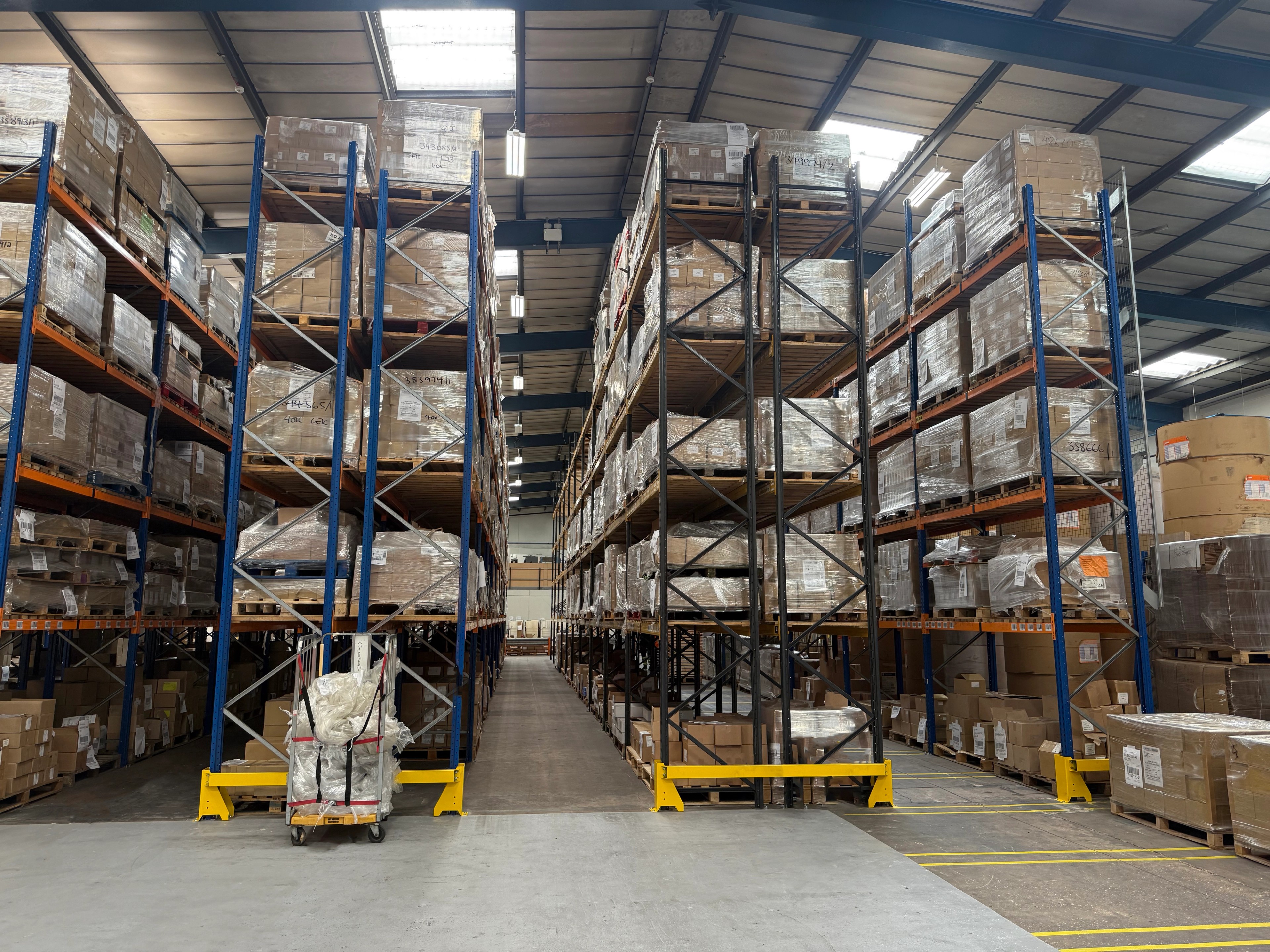
Narrow aisle racking strikes a balance between accessibility and space efficiency. By reducing aisle widths, more racking can be installed within the same footprint, increasing pallet capacity without the need for a larger building.
This layout typically uses reach trucks or narrow-aisle forklifts, which offer improved lift height and tighter turning circles compared to standard counterbalance trucks.
Key advantages
- Increased storage density compared to wide aisle layouts
- Good access to all pallets
- A practical upgrade for growing warehouses
- Improved use of existing floor space
Key limitations
- May require specialist trucks or guided systems
- Slightly slower movement compared to wide aisle layouts
- Higher equipment and maintenance costs than standard forklifts
Narrow aisle racking is ideal for operations that are outgrowing a traditional wide aisle layout but still need regular access to a wide range of SKUs.
Very Narrow Aisle (VNA) Racking
Typical aisle width: approximately 1.2-1.8 metresBest for: maximising storage capacity in limited space
Very narrow aisle (VNA) racking is designed to deliver the highest possible storage density. By minimising aisle widths, warehouses can significantly increase pallet capacity without expanding their footprint.
VNA systems rely on turret trucks or articulated forklifts, which operate in extremely tight spaces and often use wire guidance or rail guidance to ensure precise, safe movement.
Advantages of VNA Racking
- Highest storage density of all aisle types
- Excellent use of floor and vertical space
- Ideal for high-bay warehouses
- Suitable for high-value or slow-moving stock
Key limitations
- Requires specialist handling equipment
- Higher upfront investment and planning requirements
- Reduced flexibility if layouts need to change
- Greater reliance on trained operators and safety systems
VNA racking is best suited to large warehouses with stable inventory profiles or sites where floor space is limited and storage efficiency is the top priority.
How to Choose the Right Aisle Width
Choosing between wide, narrow, and very narrow aisle racking isn’t just about how much space you have today, it’s about how your warehouse needs to perform now and in the future.
Key factors to consider include:
Warehouse size and future growth
Layouts should support future expansion without requiring costly reconfiguration. If growth is expected, a narrow aisle or VNA solution may provide better long-term value.
Inventory type and turnover
Fast-moving goods often benefit from wider aisles and quicker access, while slow-moving or high-value stock may suit narrower aisle systems that prioritise density.
Stock rotation method
FIFO (First-In, First-Out) operations typically require frequent access to inventory, which may favour wider aisles or flow-based racking systems. LIFO (Last-In, First-Out) operations may prioritise space efficiency over accessibility.
Equipment and labour
Specialist trucks require higher investment, ongoing maintenance, and trained operators. These costs should be weighed against the savings gained from increased storage capacity.
Safety and workflow
Wider aisles improve visibility and reduce the risk of collisions. Narrower aisles require stricter controls, guided systems, and well-defined workflows to maintain safety and efficiency.
If you’re unsure which aisle width or racking system best suits your operation, our personalised warehouse assessment can help identify the most efficient and cost-effective solution.
FAQs
What type of racking is best suited for small parts?
Small parts are often stored using shelving, carton live storage, or bin systems rather than traditional pallet racking. However, when small parts are palletised, narrow aisle or VNA racking can be effective if space optimisation is a priority.
What is the difference between narrow aisle and very narrow aisle racking?
The main difference is aisle width and equipment. Narrow aisle racking typically uses reach trucks and offers a balance of access and density. Very narrow aisle (VNA) racking uses turret or articulated trucks and delivers much higher storage density but requires specialist equipment and planning.
How wide should warehouse aisles be?
Warehouse aisle widths typically range from around 1.2 metres for VNA systems to 4 metres for wide aisle layouts. The correct width depends on forklift type, load size, safety requirements, and operational workflow.
If you're unsure what size of warehouse racking you need, enquire with us today and we can measure and design the most efficient pallet racking for your specific needs.
Arrange a consultation
Contact us today to arrange a free, no obligation consultation.
Book a consultation